
Make your chessboard a special gift
Add a personal engraving or gift wrapping with one click. You can remove these extras anytime in the cart.


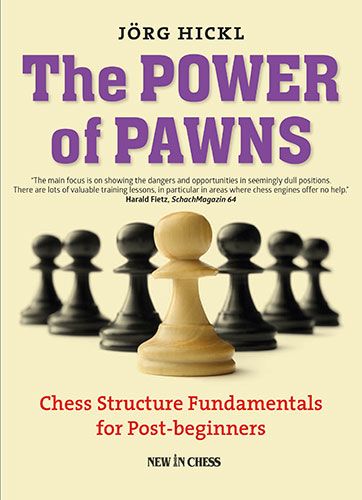

The Power of Pawns: Chess Structures Fundamentals for Post-Beginners

Add a gift box, an engraving — or both — to make it truly special.

Buy It With
40,00 zł
49,00 zł

Buy It With
80,00 zł
The Power of Pawns: Chess Structures Fundamentals for Post-Beginners is a chess training book for players who already know the basics and want to understand positional play more deeply. It focuses on pawn structures, one of the key factors in judging a position and deciding what to do next.
Jörg Hickl shows how to recognise common pawn formations, weigh their strengths and weaknesses, and turn that understanding into practical decisions at the board. It is a useful choice for post-beginners and ambitious club players who want to understand not just the moves, but why a position calls for a particular plan.
What this book covers
Hickl explains how pawn structure shapes the whole position. Even a single pawn move that looks harmless can weaken a setup or create the basis for a win. Understanding pawns helps you:
- judge the strengths and weaknesses of a position,
- recognise common strategic patterns,
- find ways to improve the placement of your pieces,
- build a sensible plan for both White and Black.
The book keeps the focus on clear, practical explanations and examples from real games. Rather than staying at the level of theory, it presents typical structures, the ideas connected with them, and exercises that help you apply the material in club play and tournament games.
About the author
Grandmaster Jörg Hickl (born 1965) is a former German champion and an experienced chess trainer. The original edition was published in German as Die Macht der Bauern. His approach is direct, structured and practical, which makes this a strong book for regular training and self-study.
Key details
- Product type: chess training book
- Subject: pawn structures and positional play
- Author: Jörg Hickl
- Original title: Die Macht der Bauern
- Language of original edition: German
- Approach: practical explanations with examples and training exercises
- Audience: post-beginners and club players


Tangible precision
Each move strengthens curiosity, concentration, and self-confidence.