
Make your chessboard a special gift
Add a personal engraving or gift wrapping with one click. You can remove these extras anytime in the cart.


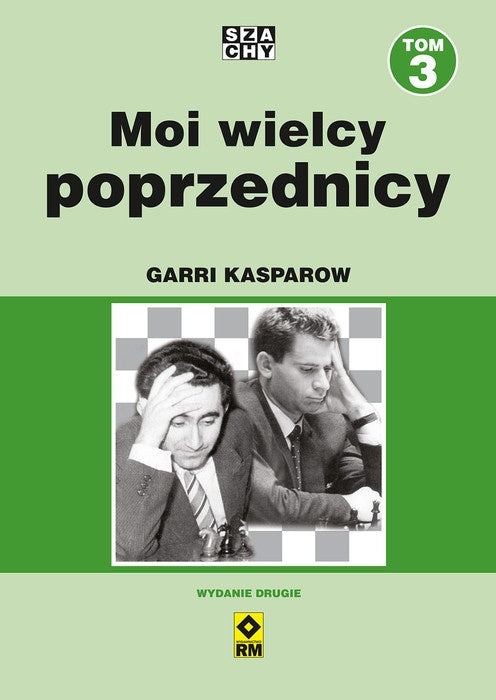

Moi wielcy poprzednicy. Tom 3 - Garri Kasparow (wydanie 2)

Add a gift box, an engraving — or both — to make it truly special.

Buy It With
40,00 zł
49,00 zł

Buy It With
80,00 zł
This My Great Predecessors, Volume 3 - Garry Kasparov (2nd edition) is the third volume in Garry Kasparov’s major series on world champions, combining chess history with fresh analysis of classic games. Using modern computer analysis, Kasparov revisits the play of earlier champions and shows why their games still matter.
What this volume covers
This book focuses on Tigran Petrosian and Boris Spassky, two of the defining figures of twentieth-century chess. Alongside their biographies, Kasparov examines their style of play, key achievements and influence on the game, placing them in a wider historical and cultural context.
The volume also covers the careers and ideas of their strongest rivals: Svetozar Gligoric, Lev Polugaevsky, Lajos Portisch and Leonid Stein. The result is a broader picture of the era and of top-level competition at the time.
Why it stands out
The strength of this volume lies in its mix of perspectives. It is part chess history, part biography and part practical study of master-level play. Kasparov does not just tell the story of his predecessors; he also re-analyses their best games and discoveries at the board.
Dymitr Plisecki, a well-known chess historian and author, also took part in preparing the volume. From 1987 to 1999, he was deputy editor-in-chief of Szachmaty w Rossii.
Who it is for
This is a book for chess readers who want a deeper understanding of the game’s history, the development of chess styles and the legacy of the world champions. It is equally suited to ambitious players studying classic games and to anyone building a chess library.
Key details
- Product type: chess book
- Series: My Great Predecessors
- Volume: 3
- Author: Garry Kasparov
- Edition: 2nd edition
- Main subjects: Tigran Petrosian and Boris Spassky
- Additional players covered: Svetozar Gligoric, Lev Polugaevsky, Lajos Portisch and Leonid Stein
- Analysis: games re-commented using modern computer analysis


Tangible precision
Each move strengthens curiosity, concentration, and self-confidence.